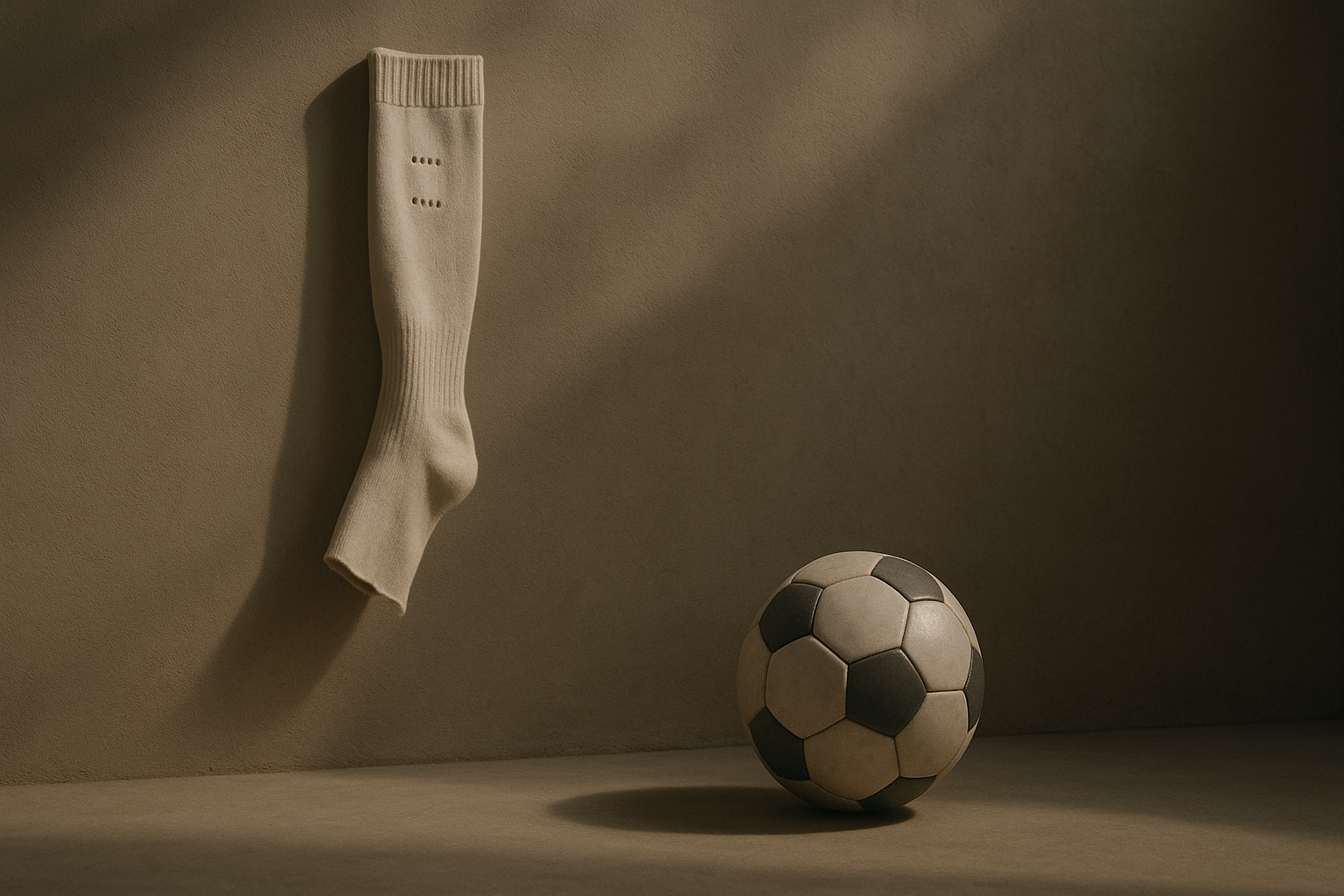
The Sock Holes Nobody Wanted to Acknowledge
At the 2026 World Cup, something genuinely strange is happening on the pitch. Players are deliberately cutting holes in their socks—not as protest, not as fashion, but because their bodies are telling them something their equipment manufacturers spent millions optimizing. The holes exist. The players need them. Everyone acts surprised.
This shouldn't fascinate me as much as it does. I work in digital transformation. I watch companies spend quarterly budgets on solutions nobody asked for while the actual problems sit ignored in customer Slack channels. But here we have athletes at the highest level of global competition saying "your product isn't working" by literally vandalizing it.
What the Research Actually Says (And What It Doesn't)
The biomechanics story is interesting enough: reduced compression points, better blood circulation around the ankle, less nerve compression. These aren't made up. Sports science supports them. But I'm not entirely convinced that's the whole picture—or maybe I should be, and I'm overthinking because I work in tech where everything needs a narrative arc.
The real issue might be simpler. Consider:
- Elite athletes have spent their entire lives optimizing movement in incremental ways
- A single millimeter of pressure at the wrong point matters when you're competing against ten thousand others who are equally obsessed
- Nobody at the equipment company bothers asking them because they assume the data from lab testing covers everything
- By the time the World Cup arrives, you're wearing something with a hole in it because comfort is now non-negotiable
This Is Where Product Development Gets Interesting
Here's what troubles me: Nike and Adidas employ biomechanics experts. They have R&D budgets larger than most countries' GDP. Yet they're shipping products that elite users immediately modify. You could argue the players are outliers. You could also argue that's exactly when you should listen hardest.
In 2023, Figma released a survey showing that 60% of designers were using Photoshop alongside their design tools—not because Figma wasn't good, but because certain workflows still needed both. Figma's response wasn't dismissive. They studied the gap. Some of that research shaped their roadmap. They didn't assume the users were wrong, even when those users represented a small percentage.
Soccer equipment companies seem to have done the opposite. I'm not sure this is entirely fair to them—the sample size at a World Cup is tiny, regional preferences vary wildly, and designing for manufacturing scale is different than designing for comfort. But the fact remains: the market spoke by cutting holes in the product.
The Uncomfortable Middle Ground
Here's where I get stuck. If you design based on edge cases, you design for nobody. If you ignore edge cases completely, you design for people who don't actually exist in the real world. The 2026 World Cup players aren't edge cases in the traditional sense—they're the opposite. They're the absolute peak of the user base. If they're hacking your product, you might be looking at signal, not noise.
But then I think about all the product managers who've heard "but our power users do something different" and that became an excuse to add complexity nobody else wanted. Maybe the sock holes are a warning. Maybe they're just adaptation. Maybe they're both, and I'm supposed to pick one anyway.
What This Means If You Build Anything
Pay attention when your best users start breaking your rules. Not all of them will be right. Some will be personal preference masquerading as necessity. But some will be showing you something real about the gap between what you designed and what people actually need. The soccer players cutting holes weren't doing it for attention. They were solving a problem they couldn't ignore.
Your customers might not cut holes in your product. They might just leave. They might complain quietly in a Slack channel nobody reads. They might build a competitor because yours was almost right but not quite.
The sock holes exist. That's the only fact that matters.