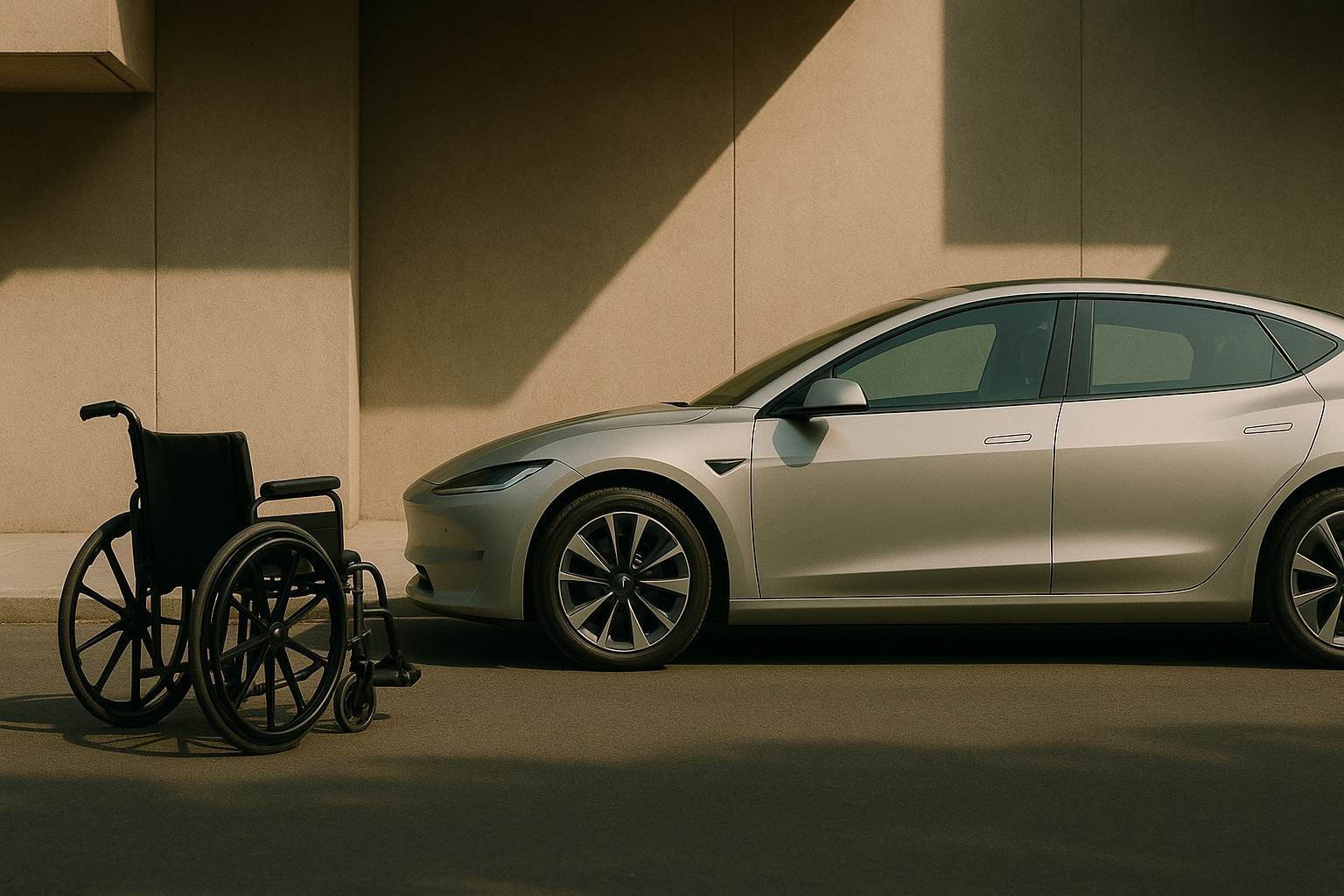
The Announcement Nobody Expected (But Should Have)
Tesla said something interesting at a DC hearing last week. Not earth-shattering. Not revolutionary. But interesting in the way that reveals how the autonomous vehicle industry is actually thinking about scale. A representative stated, almost casually, that they're building a wheelchair-accessible robotaxi. It's an "active product." The timeline? Unclear.
I've spent the last five years watching companies announce accessibility features like they're checking a compliance box. Ramps bolted onto existing designs. Voice interfaces that sound like they were trained on a dataset from 2015. But this Tesla statement—buried in congressional testimony, not splashed across TechCrunch—suggests something different might be happening. Or maybe I'm reading too much into a throwaway line. I'm genuinely unsure.
Why This Matters (And Why It Doesn't, Yet)
- The autonomous vehicle market hit $54.23 billion in 2023, according to Fortune Business Insights, and accessibility wasn't the growth driver anyone was optimizing for
- Tesla moves like this suggest they're thinking about the last-mile problem differently than Waymo or Cruise
- But there's a massive gap between "active product being built" and something people in wheelchairs can actually book
- The honest part: I don't know if this is genuine inclusion strategy or just smart PR positioning
Here's what I think I understand. Transportation networks in most cities exclude about 61 million Americans with disabilities. That's not a niche market—that's infrastructure failure at scale. When you're trying to build a truly autonomous mobility ecosystem, ignoring that segment is ignoring a massive portion of human need. So far, so obvious.
But then you hit the engineering reality. A wheelchair-accessible robotaxi isn't just a regular robotaxi with a ramp. It's different sensor placement. Different door mechanisms. Different weight distribution. Different training data for the AI models that need to understand how people board and exit. Most companies would call that a separate product line. That costs money. Serious money.
The Timeline Is the Real Story
"Unclear" is doing a lot of work in that statement. It could mean next year. Could mean five years. Could mean they're still figuring out if it's actually viable at scale. And I'm not sure which scenario is worse, honestly—announcing something you can't deliver, or dragging it out so long that competitors ship first.
What interests me is what this reveals about how Tesla thinks about product strategy. Elon Musk's company doesn't usually telegraph features without shipping dates. They either ship or they stay silent. This middle ground—public commitment with vague timeline—suggests internal uncertainty. Maybe different divisions arguing about priorities. Maybe they're trying to influence regulations before shipping anything. Maybe they genuinely want to do this but can't figure out the business model.
I keep coming back to a question I can't answer: Is accessibility a feature of the robotaxi, or does it require a fundamentally different vehicle architecture? Because if it's the latter, Tesla might actually be building something genuinely different. If it's the former, this is just good PR.
What Digital Transformation Actually Means Here
Everyone talks about autonomous vehicles disrupting transportation. Fine. But the real disruption happens when you make mobility accessible to people who've been locked out of the system entirely. That's not a feature update. That's infrastructure thinking.
The companies that understand this—that accessibility isn't bolt-on complexity but core design philosophy—are the ones that win long-term. Not because it's the right thing to do. Because it's the only way to actually scale. When you design for constraints, you often design better for everyone.
Tesla's move here could be that. Or it could be nothing. A statement made in a hearing room that gets buried when priorities shift. The product roadmap changes. The timeline extends indefinitely.
I'm watching to see which it is.